

Data standardisation, transition important parts of our modernisation strategy: Geojit's CIO
Kerala-headquartered Geojit Financial Services is an investment services company, offering a broad spectrum of services including online broking, financial products distribution, portfolio management services, margin funding, etc. Founded in 1987, it has a strong presence across India and the Gulf Cooperation Council countries.
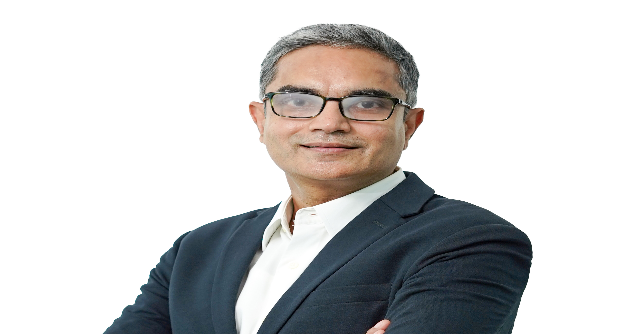
TechCircle interviewed Geojit’s chief information officer (CIO) Jayakrishnan Sasidharan to understand how this company, one of the first online share trading companies in the country, is scaling and diversifying, while also working to modernise its legacy systems.
Sasidharan is an industry veteran with over three decades of experience across companies like Tata Consultancy Services, Wipro, Capgemini, and Adobe. Even as part of technology service providers, he had great exposure to the financial services sector, including being part of the core team at the helm of the launch of the National Securities Depository Limited (NSDL).
Sasidharan joined Geojit this year with the mandate to evaluate existing infrastructure, technology, and processes to identify opportunities to better align them to business goals.
“That became our starting point: aligning the organisation more closely with its strategic priorities and determining how technology and processes could effectively enable and accelerate that journey,” he added.
Geojit’s digital transformation strategy
The company has set itself out on a three-year roadmap. “We have outlined clear goals on the business we want to pursue, the scale of customers we aim to serve, and our aspiration to be recognized as the partner that supports all the wealth needs of retail customers,” explained Sasidharan.
To this, the company is working on evolving offerings and capabilities accordingly by transforming technology, infrastructure, and core IT capabilities. “Rather than one large overhaul that takes years to show results, we will introduce multiple capabilities incrementally. This approach ensures customers experience continuous improvements over time, instead of waiting for a single, long-cycle upgrade,” he said.
Sasidharan said the company has a large, reliable technology base built over many years, and the next step is to bring in modern engineering practices and updated design principles without disrupting existing systems.
“Another major focus area is data. With customers who have been with us for 30+ years, our data exists in different formats and varying levels of maturity. So as we introduce new standards, especially around data privacy, governance, and quality, we have to carefully plan how this data gets standardised, transitioned, and transformed without disrupting the existing ecosystem. This is a significant part of our modernisation agenda,” he said.
Many of Geojit’s internal processes were created for an earlier phase of the industry, and with changing customer expectations, these processes would now be modernised to ensure a seamless, digital-first customer experience. “So prioritisation becomes crucial: deciding what to transform first, where to pilot, where to test new approaches, and how to sequence the entire roadmap,” he noted.
The organisation is evaluating which applications will need significant scale in the next few years and is running proofs-of-concept to adopt modern architectures such as microservices and built-in security. Sasidharan noted that some systems are better suited for cloud adoption than others, and the company is moving toward a hybrid model: retaining core systems as they are while using cloud platforms for suitable workloads.
Over the past six months, the company has initiated discussions with major hyperscalers like AWS and Azure, running active pilots across various areas. Additionally, they have onboarded strategic services companies to further support these initiatives.
Geojit’s tech team
Geojit has an internal technology arm, Geojit Technologies Limited, which supports all strategic and internal initiatives. This team brings deep functional knowledge, capabilities, and contextual understanding of the company’s applications and customer needs, which Sasidharan described as an inherent strength.
Geojit is now in the process of building a core technology team with a mix of in-house talent and external partners which will drive the three-year roadmap. The tech team is focused exclusively on strategy and consulting for digital transformation and customer experience, and includes architects across technology and domain, process experts, and specialists in user experience and design.
“We are also formalising capabilities across DevOps, testing, and change management, and embedding these processes into our overall IT ecosystem. Strengthening these pillars is essential for improving quality, efficiency, and speed,” Sasidharan said.
Lastly, Geojit is also investing in building a dedicated team to handle immediate operational needs, which includes regulatory updates, exchange-mandated changes, and B2B partner requirements. “These are constant and time-sensitive, so we are carving out a specialised ‘keep-the-lights-on' team, largely from our Geojit Technologies organisation, to ensure production systems remain stable and compliant,” he added.
Next Article