

India plays central role in designing and building our AI Infrastructure portfolio: Hitachi Vantara exec
As enterprises grapple with explosive data growth, rising cyber risks, and the rapid adoption of AI, infrastructure decisions are moving back into the boardroom. Hitachi Vantara, data and storage subsidiary of Japan-based Hitachi.
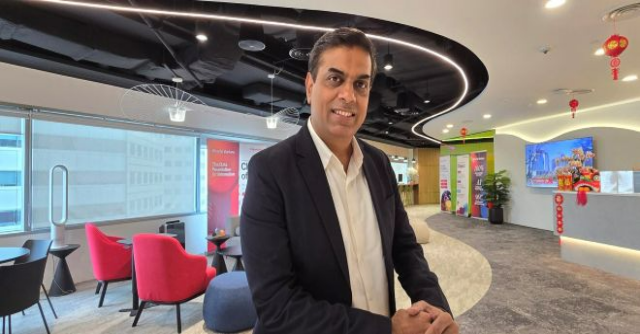
In a recent interview with TechCircle, Suraj Kotipalli, APAC Business Leader for Data Platforms and Solutions, spoke about how the company is evolving from its traditional strength in enterprise storage to hybrid cloud, cyber resilience, and AI infrastructure while also highlighting India’s growing role as a hub for innovation within the Hitachi Group.
Edited excerpts:
What are the key pillars of Hitachi Vantara’s storage and AI strategy, and where are you seeing the strongest growth?
Our storage portfolio is organised into four core solution areas.
The first and largest is our block and file storage portfolio, which accounts for nearly 80% of our business. This portfolio supports mission-critical applications used by large enterprises such as banks, government bodies, and manufacturing organisations. Most core databases and critical workloads run on this platform. This is called our VSP One storage portfolio, our flagship offering that brings together all block and file storage capabilities under a single umbrella.
The second portfolio object storage is for managing rapidly growing volume of unstructured data. This includes data generated within data centres, at the edge, and across IoT environments. Through the VSP One Object portfolio, we help customers analyse unstructured data, including sensitive and regulated data such as personally identifiable information (PII).
Our AI infrastructure portfolio is called Hitachi IQ. One of our fastest-growing areas over the past two and a half years, Hitachi IQ provides fully integrated, ready-to-deploy AI infrastructure that enables customers to run AI platforms and large language models at scale. We are continuing to invest heavily in innovation across this AI portfolio.
Lastly, our fourth portfolio focuses on hybrid cloud and cyber resilience, which have become a critical priority for organisations and is tightly integrated with our core storage offerings. In this portfolio, we help customers protect and recover data from ransomware and other cyber threats, while also enabling seamless connectivity between on-premises environments and public clouds. This includes solutions built for platforms such as VMware, Red Hat, and OpenStack, helping customers operate securely across hybrid environments.
Across all four portfolios, I lead specialist teams, and in every country within the region we have experts in place to support local sales teams and professional services in delivering these solutions to customers.
Hitachi Vantara is often seen as an on-premises storage leader. How is the company evolving its strategy as enterprises adopt cloud and hybrid models?
Traditionally, Hitachi Vantara has been extremely strong in on-premises solutions. If you look at large enterprises, most mission-critical applications continue to run in customer-owned data centres. At our core, we are a data storage company, and the majority of these critical workloads store their data on Hitachi platforms. Our appliances, along with the associated management, security, and software layers, have historically been deployed primarily in on-premises environments.
Even today, most large organisations operate their own data centres. Banks such as ICICI and HDFC, as well as large government institutions, run their servers, storage, and infrastructure within their own facilities. This remains the foundation of our business.
At the same time, we have significantly expanded our capabilities into the public cloud. Several of our solutions are now cloud-enabled. For example, our flagship storage platform VSP One is available as software-defined storage across all three major hyperscalers—Microsoft Azure, Google Cloud Platform, and AWS. This allows customers who already trust our on-premises storage to deploy the same enterprise-grade capabilities in the cloud.
Importantly, this also enables hybrid architectures, where on-premises environments are seamlessly integrated with public cloud deployments using the same storage platform and management experience.
In addition, we work closely with cloud service providers and large hosters. In India and globally, we have partnerships where service providers deploy Hitachi storage in hosted environments and offer it to customers as a managed or as-a-service offering.
Which direction are you seeing customer preference tilt towards, especially with the growth in mission critical data?
It really depends on the type of customers we primarily work with. Hitachi Vantara predominantly serves large, enterprise-class customers—banks, government organisations, and large manufacturing enterprises—customers that operate significant, complex infrastructure environments.
For these organisations, mission-critical applications continue to run on-premises. Whether it’s core banking systems, credit cards, loan processing, supply chain platforms, or core CRM systems, these workloads have largely not moved to the cloud. This is driven by factors such as security requirements, data sovereignty, regulatory compliance, and the need for tight operational control.
What has moved to the cloud are customer-facing and innovation-led applications. Enterprises are increasingly using the cloud for digital initiatives and customer experience platforms, where they can take advantage of cloud-native services and faster innovation cycles, while still keeping their core systems of record on-premises.
We help customers adopt hybrid architectures. A common scenario we see is customers temporarily moving data from on-premises environments to the cloud to run analytics, AI, or specific digital projects. Once the desired outcomes are achieved, the data is either deleted from the cloud or moved back on-premises, ensuring data governance, compliance, and control remain with the customer.
By contrast, born-in-the-cloud organisations, which are typically smaller, newer companies with limited infrastructure needs, often run entirely on public cloud platforms from day one. These are not our primary focus. Today, our customer base is overwhelmingly made up of large enterprises, where hybrid, regulated, and mission-critical environments remain the norm.
Which are some of the prominent customers in India?
It would be fair to say that nearly 90% of India’s public and private sector banks run on Hitachi storage platforms in some form. Our footprint across the Indian banking ecosystem is longstanding, spanning both public sector and private sector institutions.
Beyond banking, we have several publicly referenceable enterprise customers. One example is Malayala Manorama, one of India’s largest media houses. We have an official case study with them, where Hitachi platforms power their 24×7 digital and publishing operations, supporting always-on media delivery across their Malayalam news ecosystem.
Another key reference customer is Infosys, which represents one of our most significant enterprise deployments in the private sector in India.
Additionally, the government sector is another area where Hitachi is exceptionally strong. We support highly critical and sensitive government environments, including deployments across domains such as defence, home affairs, and other mission-critical national infrastructure. One of our largest government customers is the National Informatics Centre (NIC), which is a central technology backbone that supports a wide range of government departments and agencies across the country.
We also have a strong presence across telecommunications, with several large telcos running on Hitachi storage platforms.
As data volumes grow exponentially, how critical has sustainability become in enterprise data storage?
Sustainability is no longer a talking point; it has become a business necessity, especially for the enterprise customers we work with. Data growth is accelerating rapidly, and if organisations continue to add storage, systems, and power in the same way, it becomes both an environmental challenge and a cost problem. That’s why sustainability today is firmly part of boardroom discussions.
From a product perspective, we address this in several ways.
First, we design storage platforms to deliver higher performance with lower power consumption. A key metric here is IOPS per watt—how much storage performance you get for every unit of power consumed. Independent benchmarks compare storage vendors on this metric, and our latest product generations have delivered 30–60% improvements in energy efficiency. This is the result of deliberate design and continuous innovation.
Second, we focus on extending hardware life through what we call Modern Storage Assurance. Traditionally, customers replaced entire storage systems every few years, creating significant electronic waste. With our NVMe-based architectures, data drives can last 10–15 years. Customers can upgrade controllers and software to gain new features and performance without replacing the data or the drives. This dramatically reduces environmental waste while improving ROI.
Third, we drive sustainability through density and data reduction. Storage density has increased significantly, from around 8 petabytes per rack to as much as 16 petabytes per rack today. With high-capacity NVMe flash drives which are 60TB today and roadmap plans for 120TB and beyond, we reduce physical footprint and power consumption.
Beyond products, sustainability is embedded in how we operate. For example, our distribution centre in the Netherlands runs on solar energy and generates more power than it consumes, feeding surplus electricity back into the grid. We also implement best practices in data centre design, including efficient cooling, energy-optimised lighting, and water management.
How big is India for Hitachi Vantara from a talent and growth market perspective?
In India, Hitachi Vantara is a market leader in enterprise storage platforms. When you look at the storage market, it is broadly segmented into high-end, mid-range, and entry-level systems. In the high-end enterprise storage segment, we consistently rank number one, with a significant market share and a large, established customer base across industries.
From an investment standpoint, while our physical storage systems are manufactured in Japan, India plays a critical role in our software, engineering, and services ecosystem.
A substantial portion of our software development, product management, and engineering is based in India, primarily across Bengaluru and Hyderabad. These teams are deeply involved in building core software, management tools, and platform capabilities that ship globally as part of Hitachi Vantara products.
We also have large delivery and managed services centres in Hyderabad, supporting global customers. In addition, our process, quality assurance, and testing teams are based in Kolkata, where every product release undergoes rigorous QA, validation, and debugging before being released to the market.
Notably, A significant portion of the design, development, proofs-of-concept, and execution for our Hitachi IQ solutions is driven by our India-based engineering and consulting teams.
Beyond Hitachi Vantara, the wider Hitachi Group services ecosystem is also strongly anchored in India. Through companies such as GlobalLogic and Hitachi Digital Services, we have thousands of professionals based in the country who work for delivering cloud migration, consulting, managed services, and digital transformation services for Indian customers, as well as across the US, EMEA, and APAC regions.
How do you see data storage and infrastructure evolve in 2026?
The first and most obvious trend is data growth. Recent industry reports estimate that global data volumes will reach well over 300 zettabytes by 2028, which clearly indicates the scale at which data is expanding.
What’s important to note, however, is where this data is growing. It’s not just in centralised data centres. Increasingly, data is being generated at the edge, across IoT devices, remote locations, laptops, mobile devices, and sensors. In fact, data growth at the edge is outpacing growth in traditional data centres. This shift brings significant security and governance challenges, as organisations now need to protect and manage data across far more distributed environments.
The second major trend is AI adoption. Today, most enterprises are still experimenting with AI through pilots and proof-of-concepts. But as AI moves from experimentation to large-scale production deployments, it will drive a substantial increase in data creation, processing, and storage requirements. AI will be a major accelerator of data growth across enterprises.
Another critical shift we’re seeing is the rise of shadow AI. Similar to shadow IT in the past, employees are increasingly using AI tools independently often without the knowledge or approval of IT teams. This creates two challenges: uncontrolled data growth and serious data security, privacy, and sovereignty risks. Organisations often don’t know what data is being uploaded into public AI tools or how it’s being used.
These are some of the most important trends that I see shaping the future of data storage and data management today.
Next Article