

AI-first engineering—not more tools—will define enterprise scale: Intuitive.ai's Jay Modh
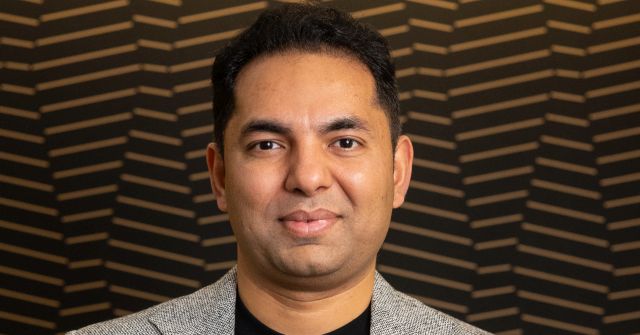
As enterprises move beyond cloud-led modernisation, many are realising that AI adoption is less about deploying new tools and more about achieving coherence—across data, systems, governance, and execution. Intuitive.ai, founded by Jay Modh, is positioning itself at this inflection point with its AI-first engineering (aiE) framework, designed to help large organisations translate AI ambition into durable, enterprise-scale outcomes. In this interview with TechCircle, Modh explains why Intuitive.ai shifted from a cloud-first approach, how aiE bridges the gap between experimentation and execution, and what sets the company apart in a crowded enterprise AI market. Edited excerpts.
What prompted Intuitive.ai’s shift from cloud-first to AI-first engineering?
The shift came from what we repeatedly observed inside large enterprises. Cloud initiatives helped modernise infrastructure, but they rarely addressed the deeper friction slowing transformation. Data remained fragmented, processes evolved in silos, and initiatives often ran in parallel rather than as a single, coherent system.
Over time, it became clear that progress was not constrained by access to technology, but by a lack of alignment. Enterprises needed a way to connect innovation, automation, and engineering into one disciplined approach. That led to AI-first engineering, or the aiE framework. It formalises how we reduce complexity, strengthen engineering discipline, and help organisations move from experimentation to measurable outcomes.
AI-first engineering reflects how modern enterprises actually operate—where applications, data, AI models, and governance are deeply intertwined. Our transition to Intuitive.ai simply made that reality explicit. AI is no longer a side initiative; it is a defining force for enterprises that want to remain resilient, secure, and scalable.
How does the AI-first engineering framework bridge the gap between AI ambition and execution?
AI often enters enterprises with high expectations but limited alignment. Teams experiment in isolation, data foundations vary in quality, and pilots rarely mature into dependable systems. The aiE framework was created to change that pattern. It begins by aligning initiatives to business context and outcomes. aiE brings order to fragmented environments by creating a connected value chain across applications, data, AI systems, and security. This allows organisations to move from scattered efforts to a cohesive modernisation program that is practical and measurable. On the execution side, the framework introduces automation, which reduces noise, reinforces engineering discipline, and creates the conditions required for scale. With reusable accelerators, industry expertise, and elastic delivery models, teams can move beyond prototypes into production with confidence in reliability, compliance, and long-term viability.
Which industries are adopting your AI-driven solutions the fastest?
Financial services, healthcare, and large industrial enterprises are moving the fastest. These sectors operate in complex, highly regulated environments and depend heavily on data quality, which makes a structured approach like aiE particularly relevant.
In healthcare and life sciences, we see strong momentum around modernising clinical systems, streamlining research workflows, and managing sensitive data with greater clarity and control. Industrial and manufacturing organisations are accelerating adoption to strengthen operational resilience and evolve legacy platforms to support AI at scale.
Across sectors, the driver is the same. Legacy systems are under strain, regulatory expectations are rising, and AI experimentation is no longer optional. The higher the operational and reputational risk, the stronger the push toward structured, accountable AI adoption.
How do you ensure trust and compliance in enterprise-scale AI deployments?
Trust and compliance become critical once AI systems start influencing real decisions. If enterprises cannot rely on data integrity, process transparency, and outcome consistency, AI will not endure.
We start with a secure-by-design foundation, supported by standards such as ISO 27001, SOC 2 Type 2, and GDPR. The aiE framework adds structure by defining how data is handled, how models evolve, and how decisions are monitored over time. It also creates traceability around system behaviour, which is essential for regulated industries like healthcare and financial services. For us, trust is not a feature or an add-on—it is the condition that makes enterprise-scale AI viable.
What tangible outcomes are clients seeing after deploying Intuitive.ai?
Value shows up in very practical ways. A financial services client modernised a long-standing portfolio management system using our AppEvolve accelerator, leading to smoother releases and more stable performance during peak demand. That reduced troubleshooting time and accelerated feature delivery.
In another case, a healthcare organisation consolidated its network, cloud, and data-centre environments into a unified, software-defined platform. This lowered operational complexity and improved visibility and control. The most meaningful impact is not isolated efficiency gains, but the shift toward predictable, resilient systems where productivity and cost benefits compound over time.
Enterprise AI platforms are getting crowded. What gives Intuitive.ai an edge?
There is more choice than ever, yet many enterprises feel less clarity. Tools evolve quickly, but harder questions—how AI fits into existing systems, how it behaves under real pressure, and how it remains accountable—often go unanswered. Our edge comes from addressing those questions first. We focus less on features and more on durability—data quality, traceability, and system design. Large incumbents optimise for breadth, startups for speed. We optimise for maturity. By treating AI as a capability that must grow inside the enterprise, we help customers achieve outcomes that last.
Next Article