

Zebra Technologies exec on how India is digitising, and tech adoption is accelerating
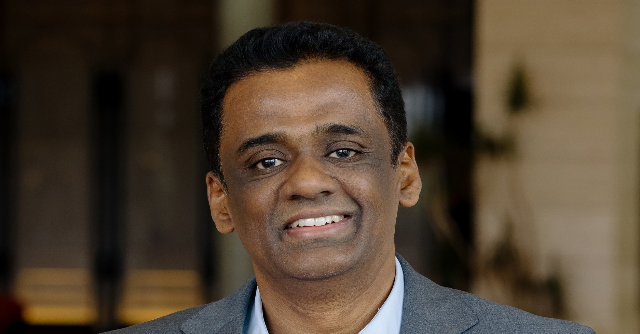
India’s enterprise tech spending is increasingly shifting from “top-layer” digital transformation to tools that help frontline teams make decisions in real time, from factory floors and store aisles to delivery routes and public services. In a conversation with TechCircle, Subramaniam Thiruppathi, Country Head ISC at Zebra Technologies, described where he sees demand concentrating in India, how Zebra is approaching AI use cases in operations, and why tier-two and tier-three cities are becoming central to the company’s India strategy.
Edited Excerpts:
What are the two or three technology bets Zebra Technologies is making that you believe will matter most by the end of this year?
Our job has always been to enable the frontline, helping the people on the ground make the right decisions. With the latest AI tools, we are able to complement the way the industry and technology are growing.
Let me take manufacturing as a vertical. We are working with manufacturers across class B and class C cities on visibility, vendor visibility, and inward visibility are among the most important requirements in manufacturing. We recently worked with a large automobile company on a just-in-time model. Just-in-time has been a term for decades, but we have redefined it with one of these manufacturers: they now run on zero inventory, with everything back-to-back, because we have built end-to-end visibility from their 75-plus vendors, who themselves have sub-vendors, all the way to the shop floor where finished goods are made. We are betting heavily on manufacturing.
We are also betting heavily on retail. If you take a town like Hosur in Tamil Nadu, large investments are coming in from electronic manufacturers, auto manufacturers, and auto ancillary companies. When such large operations happen in category B and C towns, the middle class grows. When the middle class grows, retail and e-commerce grow with it, and that in turn drives transportation and logistics. We are working with retailers on workforce scheduling, demand forecasting, and inventory optimisation. What used to be straightforward, maximum demand coming from a locality like Powai in Mumbai, those calculations are changing. We are seeing category B and C cities generating demand for goods that were previously associated only with large metros.
A surprising vertical that has grown fast for us is government. Government departments are digitising across their portfolios, public safety, excise, food departments, and defence. We are in discussions with the Maharashtra state government on how to empower the technology parks they are building, how to support their third-party logistics activities, how to improve public safety, and how to equip police vehicles with better tools and end-to-end visibility. Government has been a faster-growing segment for us over the last two years, and I expect that to continue for the next two to three years.
Then there is the transportation and logistics sector. FedEx recently opened its largest logistics park in western India, in Maharashtra. We are also seeing significant investments from global 3PL (third-party logistics) players like Kuehne and Eagle. As logistics costs reduce, India will become more globally competitive. These are early signs that India is growing robustly across the spectrum.
Where does Zebra see the strongest fit in India—given the “consumer vs innovator” perception—and which sectors are still under-digitised, especially in manufacturing and logistics?
India is digitising in a way that reminds me of what happened in the late 1990s and early 2000s, when our telecom adoption ran ahead of several developed countries. Technology adoption today in India is becoming faster and more efficient than in a number of comparable markets.
The largest technology adoption right now is in the electronics industry, pharmaceuticals, and the auto vertical, where companies are focusing on end-to-end visibility and efficiency. I would point to some of these electronic export hubs as places where technology requirements are being built that are indigenous to India, meaning we are not just consuming technology, we are innovating here.
Some of our partners are genuinely developing new solutions. One is going to showcase at NRF in Singapore. Several of our retail customers have built technologies they are now trying to resell to larger retailers globally. With AI coming in, and because of the scale India operates at, we are able to develop use cases and refine them faster than many other countries, simply because of the volume of data and transactions we can run through a given use case.
Take RFID adoption in retail. The top five or seven structured retailers in India, garment retailers specifically, have all now adopted RFID (radio-frequency identification, a technology that tracks items using electronic tags). RFID is being rolled out across all their stores over the next 12 to 24 months; some have already enabled 50 percent of their garment stores. Globally, that level of mass adoption has been slower. India is moving faster.
For Zebra specifically, we have a large R&D centre in Bangalore with over 1,000 people, a centre in Pune, and a centre in Colombo, Sri Lanka. These centres add direct value to our customers in manufacturing, retail, and government. Some government departments have made it a standing requirement to visit Zebra every six months. In the way that Aadhaar and India's payments infrastructure now lead globally, some of our technology implementations in retail and manufacturing are similarly at the forefront of global practice.
Zebra works closest to the frontline, not just the top layer of digital transformation. Why do you think India’s next growth phase will be won or lost there?
India will grow regardless. The question is which players will capture that growth and which will miss it. If a retailer cannot adopt technology for demand forecasting, it will continuously run out of products on the shelf. If products are not on the shelf, they lose sales. That pressure on the bottom line limits their ability to expand into new stores and new locations. The smart ones will grow faster.
For example, there are two ways to approach demand forecasting. One is to use POS (point-of-sale) data, which is a lagging indicator, it tells you what sold after the transaction happened, and the store then tries to replenish that evening. The other is continuous, real-time monitoring. Consider what happens in a store when a product gets moved from its designated shelf by a customer, perhaps during browsing, and is placed somewhere else. That item is no longer in the POS data for the next customer. It is a lost sale, invisible to the system.
With AI and vision cameras, cameras that we also manufacture, we are continuously monitoring shelves. Whenever there is movement, the system reports back in real time, and replenishment can be triggered through the supply chain immediately.
In a garment store enabled with RFID, we can track how many times a particular garment moved from the shop floor to the trial room to the payment counter without being purchased. If orange jeans are not selling in one location, the system can flag that merchandise for reallocation to another store or city where it might move. Retailers can now plan merchandise in real time.
A similar logic applies in a grocery store. When a delivery truck arrives at a store at 7 a.m., if the store manager is occupied and does not process the inward for 45 minutes to an hour, a significant portion of the morning sales window, when shoppers pick up fresh produce before school or work, is already gone. We monitor when the truck arrives, when it is processed, and when the goods reach the shop floor. That is where frontline efficiency directly affects the bottom line.
With all the excitement around AI, how do you distinguish AI that is genuinely improving frontline operations from AI that sounds impressive in a presentation but does not deliver?
I go directly to the CEO, and increasingly, CEOs call Zebra because they recognise that we bring operational value. When I work with auto manufacturers, we are actively working with all of the top ten, though I will focus on the top five. I look for use cases where AI replaces or enhances a specific, measurable task.
One example is the paint shop quality check. We have placed a high-resolution camera, around 100 times more precise than a standard smartphone camera, that inspects every vehicle coming off the paint line for scratches and colour consistency. It qualifies a unit in under 10 seconds, and it performs better than a human eye for this task. That is a genuine use case.
Yard management is another. In a vehicle manufacturing yard, knowing exactly where a specific car is located and how quickly it can be shipped to a customer in another city is a real operational problem AI can solve.
In retail, we have built a tool we call store open, store close. A new retail employee joining for the first time can use a handheld device to scan shelves before opening. The system checks whether the store is arranged according to the planogram (the prescribed layout for merchandise), and confirms whether it is ready to open. Before closing, the system identifies perishable items that have not sold and can prompt a discount to move them. These reduce losses directly and improve the bottom line. It is a mix of RFID, vision cameras, and handheld devices that gives a supervisor decision-making capability in real time.
In healthcare, we have AI agents, what we call agentic AI, that enable nurses and staff to act at the point of requirement, from operating theatres outward.
The biggest AI use case for us, in terms of volume, is in transportation and logistics. A delivery agent takes a photograph of a drop at a customer's door when the recipient is not home. That photograph, if unprocessed, is a privacy risk — it can capture the home interior, windows, and a pet. We have built machine learning that automatically crops out everything except the relevant confirmation: the parcel, the door, and the door number. That protects privacy and documents the delivery. Similarly, for a driver managing multiple stops, we use a combination of RFID and vision on the vehicle so that when the truck stops at a location, the system immediately identifies which parcels are for that stop, out of hundreds, and where each one needs to be delivered. That is not a boardroom concept. That is a working use case deployed today.
My view on AI generally is this: all the growth we have seen in the last two years is in AI use cases. While some people say AI is a bubble, I believe the genuine applications will succeed, though some will not, primarily because AI is only as good as the data feeding it. If the underlying data is wrong or incomplete, the system will fail. It is not a bubble for us. It is where we operate.
If we spoke again in 12 months, how would you describe where Zebra’s India strategy stands?
India is no longer four metros and four mini metros. India now has 200 cities, and the question for us is how to scale into that footprint. I can get from Chennai to Coimbatore, but today investments are happening in Trichy, where Micron and Sanmina are investing, and in Madurai, where a technology park is coming up. I am already finding that when I visit Bangalore, I need to extend to Mysore, Manipal, and Hosur because the growth is distributed across these geographies. Earlier, I could go to Bangalore, meet two or three customers, and return. That is no longer the case.
I would call Zebra India a success in 12 months if we have meaningfully scaled into tier two and tier three cities. The opportunity there will come primarily from manufacturing, but it will be a mix of use cases and sectors. That geographic expansion, reaching where India's industrial growth is actually happening, is the strategy.
Next Article