

Cybersecurity needs an outcome owner, not more tools: 63SATS’ Srinivas
Artificial intelligence is rapidly redrawing the cybersecurity threat landscape, pushing enterprises to rethink long-term defence strategies. Even organisations well into their AI journeys are grappling with fragmented security stacks and rising exposure to AI-led risks.
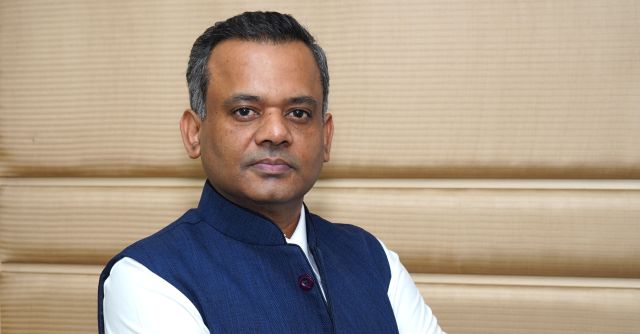
63SATS Cybertech, part of 63 moons technologies, is positioning itself as an “outcome owner” in this evolving market—focusing on measurable risk reduction rather than just deploying tools. In an interview with TechCircle, Srinivas L, Joint CEO and MD of the company, tells Sohini Bagchi that the firm’s approach centres on integrating and continuously adapting the cybersecurity ecosystem while taking end-to-end accountability. Edited excerpts:
63SATS operates across B2C, B2B, and B2G—what is your core strategic priority within the enterprise segment today?
Our core priority in the enterprise segment is to become the “outcome owner” of cybersecurity, rather than just another solution provider in an already crowded ecosystem.
Enterprises today are heavily invested in tools, yet remain inadequately protected. Security environments are fragmented, with multiple vendors operating in silos and no single point of accountability. We address this by bringing everything together into a unified, accountable security layer—where 63SATS takes responsibility not just for deploying solutions, but for delivering measurable risk reduction.
What specific gap in enterprise cybersecurity are you solving that traditional IT services firms or global vendors are not addressing effectively?
The biggest gap in enterprise cybersecurity today is the absence of true ownership. Global vendors focus on selling products, while IT services firms typically handle implementation and operations—but neither is accountable for the final security outcome.
This leaves enterprises managing 20 to 40 different tools, often with limited real-time visibility into threats and no clear way to measure whether risk exposure is actually decreasing.
We bridge this gap by integrating these disparate layers into a cohesive security architecture, continuously validating threats, and enabling assured response frameworks. In many ways, this signals a broader industry shift—from viewing security as infrastructure to treating it as assurance.
Are enterprises moving beyond compliance-led security spending to a more proactive, risk-based approach—and how is that changing your offerings?
Yes, and this is one of the most significant shifts we are seeing. The conversation is moving from “Are we compliant?” to “Are we actually protected?”
This shift is reshaping how organisations think about security, allocate budgets, and define priorities. Increasingly, cybersecurity decisions are being evaluated in the context of business risk.
At 63SATS, we align closely with this mindset. We map cybersecurity to financial exposure, quantify the likelihood and impact of breaches, and link security investments directly to business continuity and revenue protection. That’s where we differentiate—we are not just engaging with CISOs, but also speaking the language of CFOs and business leaders.
Which industries are currently driving the strongest enterprise demand, and where are you seeing the most complex security challenges?
We are seeing strong demand from banking and financial services, where threat intensity is high and regulatory expectations continue to evolve. Critical infrastructure—such as power, energy, and utilities—is another key area, especially given rising risks from nation-state actors. Government engagements are also expanding as digital sovereignty becomes a priority. Healthcare and pharmaceuticals present a unique mix of highly sensitive data and legacy system vulnerabilities. From a complexity standpoint, key challenges include securing converged OT and IT environments, managing vulnerabilities across extended supply chains, and addressing new attack surfaces created by AI adoption.
How much of your enterprise cybersecurity stack is proprietary versus dependent on global technology partnerships?
Our approach is deliberate—we focus on controlling the intelligence layer while partnering for the execution layer.
There is little value in reinventing technologies that already exist and perform well globally. So we leverage best-in-class tools from leading partners.
What we build in-house is the orchestration, intelligence, and response framework that sits on top of these tools. While a significant portion of the underlying stack is partner-driven, the outcome layer—where risk is measured, decisions are made, and responses are executed—is owned by 63SATS. That is where the real differentiation lies.
With AI reshaping both cyber threats and defence, how is 63SATS integrating AI into its enterprise solutions in a meaningful way?
For us, AI is not an overlay—it is embedded into how we operate, across detection, decision-making, and response.
At the detection level, AI helps move beyond signature-based approaches to identify behavioural anomalies in real time. On the decisioning side, it enables better prioritisation, reducing noise and helping teams focus on what matters most. In response, AI is enabling more autonomous or assisted remediation workflows, improving both speed and accuracy.
At the same time, we are addressing risks associated with enterprise AI adoption itself—such as model abuse, prompt injection, and data leakage. This will define the next phase of cybersecurity, and it is an area we are actively investing in.
What does your go-to-market model for enterprises look like—are you building a platform-led, services-led, or security-as-a-service business?
We see this less as a choice and more as a convergence. Our model is platform-led and delivered as Security-as-a-Service, reinforced by high-value services. The platform provides continuous monitoring, analytics, and risk scoring, while the services layer ensures effective detection, response, and strategic advisory.
What ties it all together is the outcome layer, where we commit to SLA-backed risk reduction. This integrated approach allows us to deliver not just capabilities, but continuity and accountability—while building a scalable, recurring engagement model.
If you had to summarise, why should a large enterprise choose 63SATS Cybertech over a global cybersecurity vendor?
Simply put, we are not just providing tools; we are taking responsibility. In a typical setup, enterprises work with multiple vendors, each handling a small piece of the puzzle. When something goes wrong, accountability becomes diffused. Our approach is different. We integrate the entire security ecosystem, continuously monitor and adapt it, and take ownership of reducing cyber risk. Instead of managing multiple partners, enterprises get a single point of accountability—and in cybersecurity, that clarity makes all the difference.
Next Article