

TCS rides AI-led deal momentum, attrition risks linger
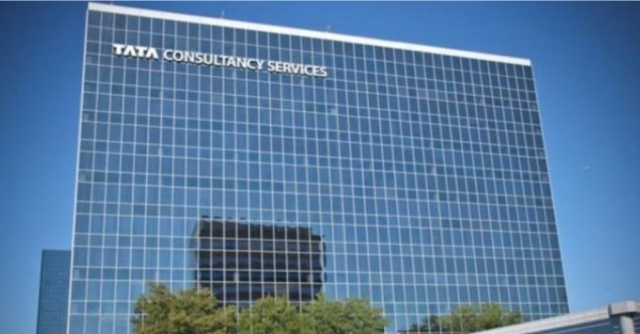
India’s largest IT services exporter, Tata Consultancy Services (TCS), closed FY26 with stronger-than-expected quarterly performance, buoyed by North America demand, large deal wins, and a sharp acceleration in AI-led transformation programmes, even as concerns around workforce stability persist.
The company reported March quarter revenue of ₹70,698 crore ($7.63 billion), up 9.7% year-on-year and ahead of Street estimates, while net profit rose 12.2% to ₹13,718 crore. For the full year, revenue grew 4.6% to ₹2.67 lakh crore, with operating margins expanding to a four-year high of 25%.
AI and digital transformation drive growth
TCS’ performance underscores a structural shift in enterprise spending, with clients moving from experimentation to scaled deployment of AI and digital technologies. The company’s annualised AI revenue crossed $2.3 billion in the fourth quarter, up sharply from $1.8 billion in the previous quarter, reflecting growing demand for production-grade AI solutions.
Chief executive K Krithivasan said sustained customer conviction in technology investments continues despite macroeconomic headwinds, positioning the company well for future opportunities.
Large deal wins remained a key growth lever, with total contract value (TCV) reaching $40.7 billion for the year and $12 billion in the March quarter, among the highest in the company’s history. These included mega deals across sectors such as retail, banking, telecom, and aviation, often anchored in cloud modernisation, AI adoption, and platform transformation.
TCS has also deepened partnerships with global technology firms such as OpenAI, AMD, and NVIDIA to build AI infrastructure and enterprise solutions, signalling its ambition to move up the value chain from IT services to AI-led business transformation.
From IT services to AI-first enterprise partner
Analysts say TCS is repositioning itself as an AI-first enterprise services player, leveraging capabilities across infrastructure, platforms, and domain-led transformation. Biswajit Maity, senior principal analyst at Gartner, said global IT spending is projected to grow over 10% in 2026, driven largely by AI infrastructure and software investments.
“TCS is strategically shifting from a traditional IT services provider to an AI-first enterprise services leader,” Maity noted, adding that the company is benefiting from rapid scaling of production AI programmes, strong hyperscaler alliances, and a large AI-skilled workforce.
TCS has invested heavily in building this capability, with over 270,000 employees trained in AI/ML and 69 million learning hours logged during the year. Its “HyperVault” initiative and partnerships are aimed at building end-to-end AI infrastructure, including data centres and sovereign AI capabilities in India.
Margins expand despite investment cycle
Even as TCS ramped up investments in AI, acquisitions, and partnerships, it delivered margin expansion, with operating margins rising 70 basis points year-on-year to 25% and net margins improving to 19.8%.
Strong execution, currency tailwinds from a weaker rupee, and a favourable deal mix helped offset higher investments. The company also maintained strong cash generation, with operating cash flow at over 100% of net income.
Hiring, skilling—and rising attrition concerns
TCS ended the year with a workforce of over 584,000 employees, continuing to invest in both campus and lateral hiring while rolling out salary increases effective April 2026.
However, analysts flagged a key risk: delivery team stability. According to Maity, rising attrition—particularly at senior levels—could pose challenges to execution as demand for AI-skilled talent intensifies.
This comes even as TCS focuses on building an “AI-first culture”, aligning workforce capabilities with evolving client needs and scaling talent for next-generation services.
Outlook: strong demand, cautious optimism
While macroeconomic uncertainties persist, TCS’s deal pipeline and AI-led positioning provide visibility into near-term growth. Analysts expect enterprise spending on cloud, AI, and digital transformation to remain resilient, supporting large IT vendors.
The company’s trajectory reflects a broader industry shift: from cost optimisation and legacy IT outsourcing to value-driven, AI-powered transformation. The challenge ahead will be sustaining growth while managing talent churn and delivering consistent execution at scale.
As part of the broader shift, TCS on Thursday also announced the renewal of its multi-year strategic partnership with UK retailer Marks & Spencer (M&S), extending a relationship spanning over a decade. Under the renewed engagement, TCS will continue as M&S’s strategic technology partner, supporting its transition into an omnichannel, data-driven retailer. The mandate includes embedding AI into core operations, modernising technology stacks, and enhancing customer experience through digital capabilities.
Next Article