

Bhavin Turakhia bets $30 mn on Neo, says enterprises need AI-native work platforms
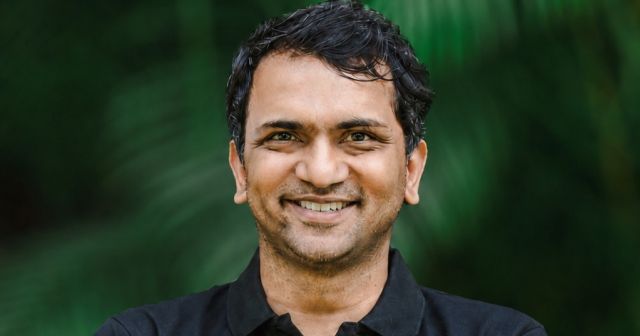
Serial entrepreneur Bhavin Turakhia on Thursday launched Neo, an AI-native enterprise work platform, committing $30 million of his own capital to a venture he believes can redefine how artificial intelligence participates in enterprise work as organisations move beyond experimentation toward large-scale adoption.
The co-founder of Directi, Radix, Titan and fintech unicorn Zeta said enterprises are failing to unlock AI's full potential not because today's large language models are inadequate, but because work, knowledge and business context remain fragmented across multiple applications.
"Everybody agrees AI can fundamentally change how we work. The problem is organisations are not capturing the full value of AI because work, context and knowledge remain disconnected," Turakhia said in an interview.
Neo aims to address that by combining project management, enterprise knowledge, document collaboration and AI agents into a single platform where humans and AI work together rather than treating AI as a separate assistant. The platform includes Friday, an AI assistant and agent layer connected to over 1,000 applications, Tasket for work management, Studio for knowledge management and Drive for collaborative file sharing.
Turakhia said most AI deployments today are built by layering assistants over legacy enterprise software instead of redesigning workflows around AI.
"The work layer is divided across tasks, context and knowledge, all of which are spread across multiple tools and people's heads. In an AI-first world, bringing all of this together becomes critical because that's how AI can actually operate," he said.
He also argued that existing AI tools remain largely consumer-first products adapted for enterprises.
"You can talk to ChatGPT or Claude to generate artefacts, but there is no collaborative workspace where multiple humans and multiple AI agents can work together on the same workstream with transparency, governance and version control," he said.
Unlike several AI startups that have relied heavily on venture funding, Turakhia said Neo follows his long-standing philosophy of building businesses with founder capital before seeking external investment.
"I've always believed in prudent use of capital and getting to profitability as fast as possible. AI has actually made this easier because it has dramatically reduced the cost of building companies," he said, adding that the technology is enabling a new generation of bootstrapped startups by reducing dependence on large engineering teams.
Neo will operate independently from Turakhia's other businesses, including Zeta, although it reflects his long-standing interest in enterprise productivity.
"My goal is to enable humans, teams and enterprises to leverage AI meaningfully to improve productivity by 10 times or even 100 times," he said.
Turakhia also outlined where he believes India can compete in the global AI race. While semiconductor manufacturing, cloud infrastructure and frontier AI models are likely to remain dominated by the US and China, India has a significant opportunity in building AI applications.
"There may be 10 or 15 frontier model companies globally, but there will be 10,000 companies building AI applications that reinvent industries. That's where India has an equal opportunity," he said. He added that Indian startups should combine the country's engineering talent with product, design and go-to-market capabilities in global markets such as the US.
Looking beyond generative AI, Turakhia said robotics could emerge as the next major technology wave.
"Generative AI is transforming knowledge work in the digital world. Robotics will transform work in the physical world—from manufacturing and logistics to household assistance. That's the next frontier I'm most excited about," he said.
Neo is expected to begin a closed beta between August and September, followed by a public launch in the first quarter of next year.
Next Article