

Oracle launches AI-native builder for agentic apps: We're the ones disrupting SaaS, says exec
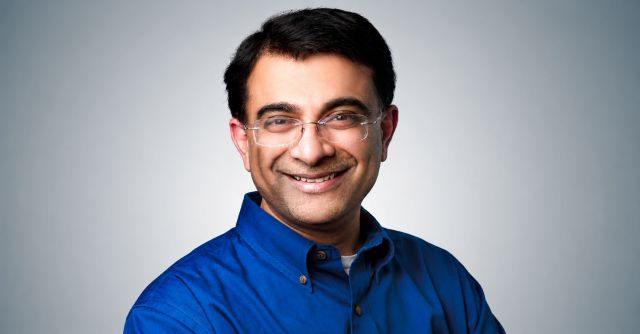
New Fusion AI builder lets enterprises create outcome-driven AI applications with built-in governance and auditability as Oracle pushes enterprise software beyond traditional SaaS.
The race to build enterprise AI is entering a new phase, and US technology giant Oracle believes the winners will not necessarily be those with the smartest AI agents, but those that can deploy them securely inside core business applications.
On Tuesday, Oracle introduced an AI-native builder experience for Oracle AI Agent Studio within Oracle Fusion Applications, enabling customers and partners to build what it calls Fusion Agentic Applications using natural language prompts, low-code tools or professional developer environments such as Visual Studio Code, OpenAI Codex and Claude Code. This offering helps enterprises move AI from experimentation to production by embedding governance, approvals, and auditability directly into their workflows.
But Oracle says the launch represents something much bigger than another AI development tool. "We think this is the next generation of enterprise applications," Kaushal Kurapati, group vice president, Applications Development, Oracle, said during a select media interaction.
"Traditional SaaS applications are largely reactive. Humans drive the work. What we're building are applications that proactively monitor, coordinate and execute work using teams of AI agents working towards a business outcome," he added.
Unlike standalone AI assistants or copilots that respond to user prompts, Oracle's agentic applications combine multiple specialised AI agents that share context and memory, allowing them to collaborate inside enterprise systems and execute business processes while operating within existing governance frameworks.
Kurapati said the biggest challenge enterprises face today is not building AI models, but deploying them with sufficient trust to automate business-critical operations. "This is not a standalone agent or a copilot sitting adjacent to enterprise software. It is a full-fledged enterprise application. It's proactive, it monitors work, prioritises decisions automatically and operates with enterprise-grade governance," he said.
The builder enables business users to create agentic applications through natural language prompts, while developers can build using familiar coding tools integrated with Oracle's AI Studio Skill. Oracle has also embedded testing, debugging, audit trails, human approvals and model optimisation into the development environment to simplify enterprise deployment.
Industry analysts say that focus on governance reflects how the enterprise AI market is evolving. "The enterprise agent race has quietly changed shape. The market is already saturated with agents; the contest is no longer over who builds the smartest one, but over who owns the governed runtime in which agents are permitted to act," said Sanchit Vir Gogia, Chief Analyst and CEO at Greyhound Research.
According to Gogia, Oracle's latest announcement matters because it opens the creation of Fusion Agentic Applications to both business users and professional developers while ensuring that applications inherit enterprise security, approvals and auditability from the outset.
"Agents built this way are born inside the system of record, designed to inherit the security, approvals and auditability that agents built outside it must reconstruct at great expense. Where that design holds, a company can move from AI that recommends an action to AI that takes the action itself, under the controls it already trusts," he said.
Oracle's emphasis on governance extends beyond security. Kurapati said the platform introduces policy models that convert business policies written in natural language into executable code, reducing the non-deterministic behaviour often associated with large language models. For high-impact decisions, the platform routes recommendations through structured human approval workflows while maintaining complete audit trails and replay capabilities for compliance and debugging.
India is expected to play a significant role in Oracle's strategy as enterprises increasingly customise AI for industry-specific use cases. Kurapati said Oracle conducts dedicated Fusion Agent training programmes for Indian system integrators every quarter and expects the country's large developer ecosystem and global capability centres to accelerate enterprise AI adoption.
"We're addressing a huge developer population in India. These tools make it possible to build enterprise agentic applications in minutes, test them and confidently deploy them inside Fusion," he said, adding that Oracle is already seeing interest from banks, lifestyle brands and existing Fusion customers in India.
Holger Mueller, Vice President and Principal Analyst at Constellation Research, said Oracle is "redefining the next-generation application platform for the AI era" by combining applications, platform and agentic capabilities into a single builder experience instead of requiring enterprises to add governance controls later.
For Oracle, the objective is no longer to build another AI assistant, but to redefine enterprise software itself. "We agree SaaS applications are being disrupted," Kurapati said. "We're the ones disrupting them. This is what we believe the next generation of enterprise applications looks like."
Next Article