

Manufacturers move beyond AI pilots as physical AI gains momentum
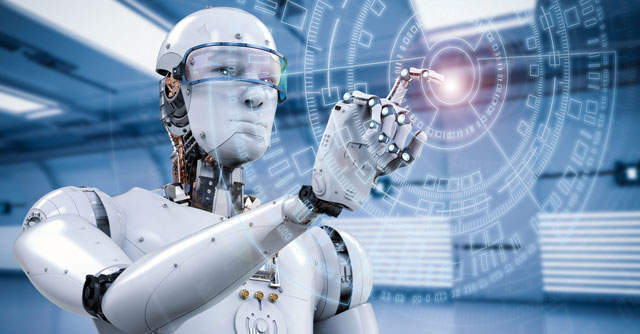
Artificial intelligence is beginning to move off computer screens and onto factory floors. Across manufacturing plants, AI-powered robots are inspecting products for defects, autonomous vehicles are transporting materials across warehouses, and machine learning models are predicting equipment failures before they disrupt production. The next phase of industrial AI, increasingly referred to as physical AI, is shifting from experimentation to enterprise deployment as manufacturers seek greater productivity, resilience and workforce safety.
A new report by Tata Consultancy Services (TCS) suggests that this transition is gathering pace. According to the Future-Ready Manufacturing: TCS Physical AI Readiness Report 2026, manufacturers are increasingly moving beyond standalone automation projects towards integrated AI ecosystems spanning production lines, warehouses, logistics, maintenance and quality management. None of the 300 manufacturing companies surveyed across North America and Europe plan to reduce investments in physical AI, while 26% expect to increase spending over the coming years.
From pilots to production
Unlike generative AI applications that assist knowledge workers with content creation or software development, physical AI combines robotics, computer vision, sensors, edge computing and foundation models to enable machines to perceive, reason and act in real-world industrial environments.
The technology is already finding practical applications across factories. AI-powered computer vision systems can inspect thousands of automotive welds or semiconductor components in real time, often identifying defects that are difficult for the human eye to detect. Autonomous mobile robots move inventory between warehouse aisles without human intervention, while AI models analyse vibration, temperature and acoustic data from industrial equipment to predict maintenance needs before a machine fails.
Technology companies including NVIDIA, Google Cloud, Siemens, Rockwell Automation and Schneider Electric have all expanded investments in industrial AI platforms over the past two years. Manufacturers such as BMW, Mercedes-Benz and Foxconn have also begun deploying AI-enabled robotics, digital twins and autonomous manufacturing systems as part of broader smart factory initiatives. The report indicates that warehouses are expected to experience the biggest transformation from these technologies. About 77% of respondents expect physical AI to have a significant or transformational impact on warehouse operations, followed by assembly and manufacturing operations (75%) and logistics and material movement (72%).
Physical AI gains momentum
One of the report's more notable findings is that manufacturers increasingly see physical AI as augmenting, rather than replacing, workers. Instead of eliminating jobs, companies are deploying intelligent systems to handle repetitive, hazardous or physically demanding tasks while allowing employees to focus on higher-value activities such as supervision, decision-making and process optimisation. Around 42% of respondents said they expect significant workforce augmentation through physical AI, particularly in improving worker safety and productivity.
That reflects a broader industry consensus. The World Economic Forum has argued that AI-enabled manufacturing will depend as much on workforce reskilling as automation, while analysts at Gartner expect industrial AI deployments to increasingly complement human workers rather than replace them.
Legacy systems and governance remain hurdles
Despite growing investment, enterprise-scale adoption remains in its early stages. Nearly 68% of manufacturers surveyed remain in experimental or pre-deployment phases, underscoring the complexity of integrating AI into decades-old industrial infrastructure. Legacy manufacturing systems, fragmented operational data and shortages of AI-skilled workers continue to slow enterprise-wide deployment.
Industry experts say this integration challenge is one of the defining characteristics of physical AI. Unlike enterprise software environments, factories often operate production equipment that has been running for decades, making it difficult to connect machines, sensors and AI systems into a unified operational platform.
Governance is emerging as another critical issue. According to the report, 44% of manufacturers lack clearly defined accountability structures for failures involving physical AI systems, while 40% say they are unprepared for emerging AI regulations. As autonomous robots and intelligent machines assume greater operational responsibility, manufacturers are expected to face increasing scrutiny around safety, explainability and human oversight.
"Physical AI is taking intelligence beyond the screen and onto the shop floor, where machines sense, adapt and act in real time," said Anupam Singhal, president, manufacturing, TCS.
The report builds on TCS' broader push into industrial AI following the launch earlier this year of its Physical AI Gemini Experience Center in Troy, Michigan, developed in partnership with Google Cloud. The facility enables manufacturers to test AI-powered robotics, quality inspection and maintenance use cases before deploying them across production environments.
As manufacturers grapple with labour shortages, supply chain disruptions and rising productivity pressures, physical AI is increasingly being viewed as the next major phase of Industry 4.0. The challenge now is less about proving the technology's potential and more about integrating it safely, responsibly and at enterprise scale
Next Article