

AI is making identity security the new enterprise control plane, says Delinea's Asia VP
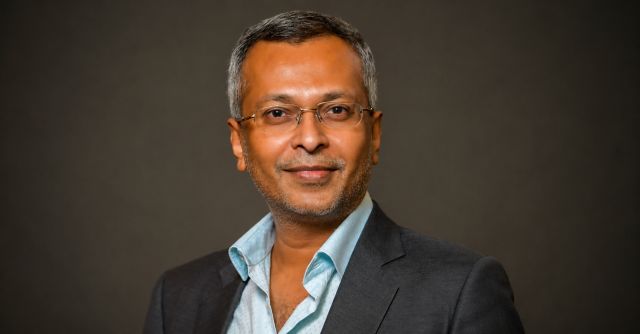
Artificial intelligence may be transforming enterprise software at unprecedented speed, but it is also exposing a new security challenge that many organisations are only beginning to understand: the explosion of machine identities.
As enterprises deploy AI agents, bots, APIs and autonomous workflows across business functions, the number of non-human identities requiring authentication and authorisation is growing rapidly. Security leaders increasingly believe identity—not the network or endpoint—has become the new control plane for modern enterprises.
"Three years ago, the conversation was largely around human identities. Today, AI agents and non-human identities are multiplying at a pace that most organisations are struggling to track," Anand (Jude) Kannabiran, Vice President, Asia at identity security company Delinea, said in an exclusive interview. "The challenge is no longer simply authentication. It's maintaining visibility, governance and trust across an expanding identity landscape."
The shift comes as Indian enterprises move beyond digital transformation projects into operational AI deployments. Banks, telecom operators, manufacturers and digital-native businesses are embedding AI into customer service, software development and decision-making, creating thousands of new machine identities that require the same governance traditionally reserved for employees.
According to Kannabiran, many organisations remain behind the curve—not because they underestimate the risk, but because AI adoption is moving faster than security programmes can evolve.
"The business is pushing AI adoption, and security cannot become the showstopper," he said. "Most organisations are trying to adapt, but the pace of AI innovation means security teams are constantly catching up."
Identity moves from access management to business risk
The biggest challenge, he argues, is visibility. "You cannot secure what you cannot see," he said, noting that many enterprises still lack a comprehensive inventory of service accounts, bots, APIs and AI agents across hybrid IT environments. Governance frameworks for these identities are also evolving as regulators introduce new requirements around data protection and AI accountability.
That is reshaping how CISOs approach security investment. Rather than treating cloud security, identity management and AI governance as separate domains, enterprises are increasingly viewing identity as the common layer connecting them. The objective is shifting from simply granting access to continuously validating whether every human or machine identity should retain access based on risk, behaviour and business context.
One technology gaining traction is context-aware access control, where AI analyses user behaviour instead of relying solely on static permissions. For example, if an employee suddenly transfers sensitive files to an unfamiliar destination or accesses critical systems unusually, AI can determine whether the activity should trigger an alert or be blocked altogether. Similar behavioural analysis is now being extended to machine identities as enterprises deploy larger numbers of autonomous AI agents.
Yet technology alone will not solve the problem. Kannabiran believes organisations must return to fundamentals—building governance around people, processes and policies before investing in additional security products. For budget-constrained CIOs and CISOs, that means understanding the organisation's identity landscape, anticipating how AI initiatives will reshape access requirements, and prioritising platforms that provide centralised visibility over multiple point solutions.
The next challenge: skills, scale and AI governance
Talent remains another obstacle. While cybersecurity skills remain scarce globally, identity security expertise is even harder to find, particularly as organisations integrate AI into security operations. Rather than relying solely on external hiring, enterprises will need continuous learning programmes, graduate hiring pipelines and greater use of managed security services to bridge capability gaps.
For vendors operating in the sector, India represents one of the fastest-growing identity security markets as enterprise AI adoption accelerates. Kannabiran said Delinea is expanding its presence by hiring across sales, pre-sales, delivery and channel roles while strengthening its partner ecosystem and exploring a local SaaS deployment in collaboration with Microsoft.
The company has also expanded its identity security portfolio through acquisitions, including StrongDM, as it broadens its privileged access capabilities. Separately, last week, Delinea launched its Partner Advantage Program to strengthen its channel ecosystem with enhanced deal-registration protections, clearer rules of engagement, and AI-driven training and certification for partners.
As AI adoption accelerates, Kannabiran believes enterprise security conversations will increasingly move beyond perimeter defence towards a more fundamental question: can organisations establish trust in every identity—human or machine—requesting access to critical systems? In an AI-first enterprise, he argues, the answer will define the next phase of cybersecurity.
Next Article