

Tenarai shifts from AI platforms to business outcomes as model advantage shrinks: CEO
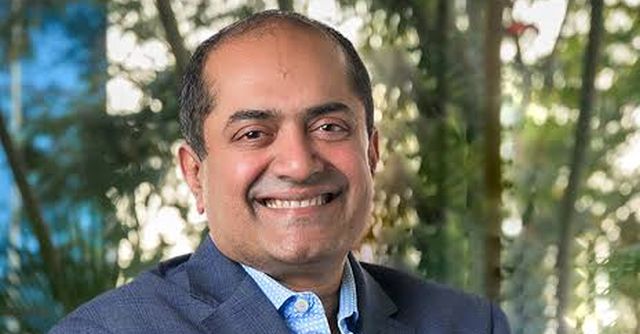
Tenarai, formerly IT services firm Infogain, is shifting its artificial intelligence strategy from building standalone platforms to solving specific business problems, as rapid advances in AI models erode technology differentiation within weeks, chief executive Dinesh Venugopal said.
The shift comes as enterprises struggle to move AI projects beyond experimentation and demonstrate measurable returns, putting greater emphasis on execution, data readiness, governance and security rather than access to AI models alone.
Venugopal said a large number of companies remain caught in what Nvidia chief executive Jensen Huang has described as “pilot purgatory”, where AI projects struggle to progress from proofs of concept to production deployments.
“Most people start with the wrong question. They ask, ‘can AI help us?’ when they should ask, ‘what business outcome can AI help us achieve?’” Venugopal said.
He cited a recent survey indicating that around 55% of CXOs are not seeing tangible value or return on investment from AI. According to Venugopal, the bottleneck is increasingly shifting from the capability of the underlying models to whether enterprises have the data, governance, security, integration and organisational readiness required to deploy AI at scale.
For Tenarai, that shift has also meant rethinking where it invests and how it works with customers. The company is moving away from treating proofs of concept as the primary measure of progress and instead focusing on taking AI applications into production and demonstrating what it calls “proof of outcome”.
Model advantage narrows
The rapid pace at which new AI models are being released is also reducing the shelf life of technology differentiation.
Venugopal said the company built an AI platform in July last year and demonstrated it to customers, initially gaining a significant technology advantage. Within roughly eight weeks, however, competitors had caught up as newer AI models became available. “The technology advantage had a shelf life of about eight weeks,” he said.
The experience prompted the company to shift its focus from primarily building platforms to solving specific business problems. As foundation models improve and become more widely accessible, Venugopal believes the model itself is unlikely to remain a sustainable source of differentiation.
Instead, competitive advantage will increasingly come from combining technology with an enterprise's proprietary data, business context and domain knowledge and successfully integrating it into production workflows.
The shift also challenges the traditional talent model of India's IT services industry, which has relied on building large employee pools around specific technology skills and retraining them as enterprise technology cycles moved from areas such as digital to cloud.
“The knowledge-worker era is over,” Venugopal said. “You can't train your way through AI.”
The argument, he said, is not that technology skills are becoming irrelevant, but that rapidly changing models make expertise in any single tool increasingly short-lived. Demand will instead move towards professionals capable of understanding business problems and combining customer context, industry knowledge and technology to deliver measurable outcomes.
New roles emerge
Tenarai has introduced roles such as Forward Deployed Engineers (FDEs) and Agentic Design Leads as part of the transition. The company opened applications for its FDE programme to more than 6,000 employees and is cross-training workers for these roles as part of its longer-term talent strategy.
Venugopal said India's AI talent challenge is therefore not primarily a shortage of engineers or people familiar with AI models.
“The gap isn't engineering headcount or model knowledge; both are abundant. People who can solve a problem and deliver business outcomes are in demand and more are needed,” he said.
The emergence of such roles could also strengthen India's position within the global technology operations of multinational companies. India has traditionally been a large technology delivery and engineering base, but Venugopal expects roles such as FDEs—which sit closer to customers and take responsibility for deploying solutions into production—to increasingly place Indian technology professionals closer to business decision-making.
“That combination of context and decision-making is becoming distributed. It goes where the talent is. India can absolutely become that core,” he said.
Beyond the chatbot phase
The nature of enterprise AI projects is also changing from the chatbot-heavy experimentation that characterised the first wave of generative AI adoption in 2023 and 2024.
Venugopal cited the example of a retailer that initially approached Tenarai seeking a chatbot. Rather than immediately developing one, the company sought to identify the underlying business objective, which was to reduce customer call waiting times.
Tenarai subsequently worked with a partner on a broader solution incorporating customer intelligence and enterprise context to address the call experience rather than treating deployment of a chatbot as the end goal.
That shift is also changing how enterprises measure returns from AI. Venugopal said companies often track activity-based metrics such as the number of AI pilots underway, deployment timelines and user feedback. While useful operationally, such measures do not necessarily demonstrate whether AI is creating financial or business value.
Boards, he said, increasingly want AI investments tied to metrics such as revenue growth, margins, customer acquisition, retention and satisfaction. “The lens that matters is proof of value in production and outcomes to the business,” Venugopal said.
For enterprises seeking to move beyond perpetual experimentation, he said technology selection should come later in the process rather than being the starting point.
“Start with outcomes, go back and understand the customer's context, understand the domain they operate in, and only then design the solution,” he said..
Next Article