

Dassault Systèmes bets on India’s new industrial capacity as AI moves into factories: India MD
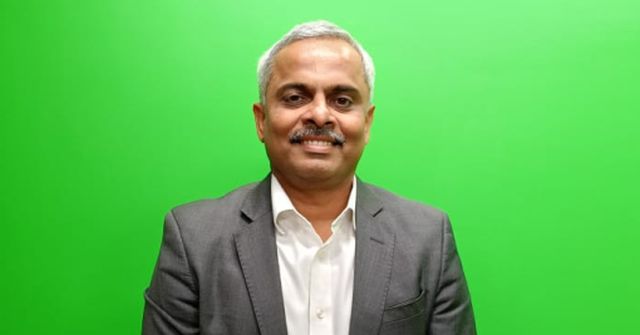
Dassault Systèmes is banking on India’s next wave of industrial growth, from semiconductor plants and data centres to AI-enabled factories, as it looks to expand beyond its existing customer base and footprint in the country. The company, whose India business has grown at a higher double-digit rate since 2022, is evaluating expansion into tier-two cities in 2027, including Hyderabad, while increasing its focus on virtual factories and digital twins for new manufacturing capacity.
But the bigger opportunity, according to Deepak N G, Managing Director, India, Dassault Systèmes, will depend on whether manufacturers can move AI beyond isolated pilots and connect it across design, engineering, manufacturing and operations. “AI cannot be looked at in silos,” he said. “You need a connected story” if AI investments are to deliver value beyond individual productivity gains.
In an interaction with Mint CIO Circle, Deepak spoke about the company’s India expansion, the demand emerging from semiconductors and data centres, its push towards native AI and industry world models, and why industrial CIOs need to think about AI as an enterprise architecture rather than a collection of use cases. Edited excerpts:
How important is India to Dassault Systèmes’ global strategy?
India is a strategic geography for us. We have a philosophy of “invest in India for India”. There are three elements to this. First, we need to be closer to our customers and have the right manpower to articulate the solutions. Second, we need talent that can implement these solutions and help customers realise the benefits, working with system integrators and partners. Third is R&D and product development.
About 25% of our global workforce is in India, so the talent here is extremely important. We are leveraging that talent not only to serve Indian customers but also to create innovative products that can be offered globally.
Are there plans to expand your India footprint?
We already have eight offices across India. In 2027, we are looking at tier-two cities where we can be closer to customers and access the right talent. Hyderabad, for example, is an area where we are looking at setting up something to support the market more closely.
Investment at the right time and with the right talent is important for growth. Since 2022, our India business has been growing at a higher double-digit rate consistently.
What opportunities do you see for AI in India’s industrial sector?
AI is no longer a discussion limited to technology leaders or even the CEOs. It is relevant across the organisation. But industrial companies need something beyond textual AI. They need what we call industry world models. Industrial AI has to incorporate physics, movement and simulation so that AI can perform, predict and provide the right outcomes. This is where our work around industry world models becomes important.
We have more than 400,000 customers globally and more than 25,000 in India. Many of these customers have used our technologies for years to create their data, content and intellectual property. If a company uses our software to design a car, the carmaker’s IP remains its own. That accumulated data is extremely valuable. Our objective is therefore to strengthen our applications with AI capabilities.
How is Dassault Systèmes approaching AI differently?
We don't want AI to simply be an additional layer sitting on top of an application. We are building native AI, embedded into our applications.
We have introduced AI companions such as Aura, Marie and Leo for governance, engineering and research. They are embedded into our existing applications on the 3DEXPERIENCE platform and supported through the cloud.
For example, a design engineer can use an AI companion while working with the company’s accumulated data. The AI can learn from what has been created over the years and help generate better outcomes. The advantage is that the data already exists on a single platform. That gives us an edge because AI can work with a single source of truth rather than disconnected data.
Is AI talent scarcity a challenge?
India is known for its talent, and our education system has shown the ability to adapt to what will be important for the future. The industry-academia gap will continue to be addressed, but AI will also create new roles.
We are working with academic institutions and governments to establish centres of excellence and help bridge these gaps. This is not only about teaching AI. It is also about combining AI with industry knowledge—whether automotive, aerospace or other engineering domains.
I am optimistic about this. AI can take away some routine activities and free engineers to focus on innovation. There will continue to be a human in the loop. The question is how we redefine the contribution of people.
What are the key priorities for Dassault Systèmes in India over the next year?
New growth industries are a major focus. Semiconductors and data centres are particularly important.
For data centres, we can create a virtual twin to simulate how a facility should be built, including how to make it greener and what precautions need to be taken. In semiconductors, we are looking at manufacturing and how virtual twins of factories can help companies simulate and validate the factory before physically building it. Once the physical factory is operational, it can be connected with the virtual model to predict, forecast, improve traceability and observability.
What is your message to CIOs looking to scale AI?
Readiness is critical. A few years ago, companies were asking whether they should move to the cloud and whether their data would be safe. Today, most organisations understand that cloud is important if they want to leverage AI.
The next challenge is moving from pilots to scale. Many AI initiatives remain siloed, and companies sometimes see AI as expensive. But the question should be how AI contributes to the organisation over the long term.
You need a connected story. If AI helps a designer create a design in two days, the next question is whether manufacturing can accept it, whether it can be produced and whether the customer will accept the final product. AI cannot be looked at in silos. Companies should build a plan that can be modular but ultimately scalable.
Next Article