

Everyone wants to use AI. few know how to build with it
Over the past year, AI has shifted from a promising experiment to an enterprise imperative. Yet the real question inside most boardrooms isn’t about what technology can do. It’s about whether their people are ready to work differently. Not organisational readiness in the structural sense, but human readiness. Who, inside our teams, truly knows how to use this technology well enough to change how we work?
That’s where the gap has become most visible. Across industries, there’s broad agreement that AI will define the next decade of growth. Yet nearly every survey tells the same story: most companies lack the people with the fluency to make that happen. Some teams are moving fast, experimenting and integrating AI deeply into delivery. Others are still testing the waters. The divide is not about technology access; it’s about capability, mindset, and intent.
Lead from the front
AI is no longer the future; it’s the present. This is the moment for leaders to move beyond awareness and into action, guiding teams not just to use AI, but to build with it, learn from it, and shape how it changes the rhythm of work. The pace of technological progress will not wait for organisations to catch up; those who lead now will define the playbooks others will follow.
Building an AI-ready workforce cannot be reduced to running training sessions or giving people access to new tools. It begins with a different conviction: if AI is changing how value is created, then it has to become the default language of work. Everything else follows from that belief.
Over the past two years, I’ve seen that transformation unfold in deliberate phases. The companies getting this right aren’t those rushing to implement models or automate tasks. They’re the ones building AI literacy across the organisation first, then layering depth, and finally scaling what works.
Phase One: Fluency as the foundation
The starting point is fluency, ensuring everyone understands how to communicate with AI systems and where they can add value. This isn’t about turning everyone into data scientists. It’s about teaching people to reason with AI, to use it as a collaborator rather than a black box.
In this first phase, organisations focus on creating a shared language. Every technologist learns to prompt effectively, to experiment confidently, and to understand where AI helps and where human judgment still leads. The goal is to promote curiosity, agility, and responsible use of AI, encouraging people to test, question, and learn without fear of getting it wrong. It’s about shifting mindsets, not titles. Once people begin to see AI as a thinking partner rather than a replacement, the conversation changes.
Phase Two: Depth and differentiation
Fluency opens the door, but depth creates advantage. The second phase moves from broad literacy to craft-level expertise. Here, training becomes more specific. Engineers deepen their technical skills through AI-driven development practices. Consultants learn to link AI to measurable business outcomes. Leaders focus on scaling responsibly and building confidence across teams. Upskilling is critical. Complete foundational AI trainings like Prompt Engineering and tools to strengthen this depth and make AI proficiency second nature.
In this phase, learning stops being an isolated activity and becomes part of work itself. Every discipline finds its own intersection with AI. For a designer, it might mean using AI to iterate faster on experience journeys. For a software engineer, it’s using AI to refactor code or generate test cases. For a leader, it’s knowing how to steer transformation without creating fear or fatigue.
Depth also comes from collaboration. When teams begin to cross traditional boundaries, when data scientists sit with domain experts or developers work with experienced designers, the quality of solutions improves dramatically. AI fluency becomes the connective tissue that brings disciplines together.
Phase Three: Scale and systemisation
Once fluency and depth take root, the focus shifts to scale. This is the phase where AI stops being a project and becomes the operating model. Workflows are reimagined end-to-end. Teams build reusable components and accelerators. Platforms evolve that embed intelligence directly into delivery, allowing experimentation to move into production faster.
But scale doesn’t happen by decree. It happens when the culture itself becomes adaptive, when teams are encouraged to share, reuse, and improve what others have built. Continuous learning becomes the rhythm of the organisation, not an initiative on a calendar. The most advanced enterprises are now here, building AI-native systems that compound learning across every function, every team, and every client.
Throughout these phases, three enablers make the difference between success and stagnation: mindset, toolset, and skillset.
Mindset is where it all begins. Without the willingness to learn, experiment, and unlearn, even the best technology sits idle. The shift starts when people stop seeing AI as a threat to their craft and start seeing it as a multiplier of their impact. The organisations that are thriving made deliberate efforts to build confidence, to make experimentation safe, to celebrate small wins, and to reward curiosity.
Toolset comes next. Upskilling isn’t effective if the tools remain disconnected from daily workflows. When AI systems are embedded into the flow of work, into development pipelines, delivery platforms, and collaboration tools, learning becomes natural. Teams start to see immediate payoff, and that drives adoption. The best implementations don’t add complexity; they remove friction.
Skillset completes the loop. AI capability matures through progression: fluency, application, creation, and leadership. Fluency ensures everyone can understand and converse with AI. Application means it’s being used meaningfully in day-to-day work. Creation happens when people start building new processes and products through AI. Leadership is when they guide others, teaching teams to scale responsibly and think long-term about impact.
When these layers align, the results compound. People who once viewed AI as a technical domain begin to see it as a creative one. Teams start to design solutions with AI at the centre rather than at the edge. Leaders no longer measure success by hours saved but by outcomes created.
This progression, from mindset to systemisation, turns AI from a technology initiative into an organisational capability. It’s also the only way to close the growing gap between ambition and readiness.
What strikes me most is that this transformation is not about tools or platforms; it’s about people. Engineers, consultants, and leaders are all learning to think in new ways, to translate problems into prompts, to blend human judgment with machine scale, and to see precision not as control but as orchestration.
That’s what the new language of work looks like. It’s built on fluency, deepened through craft, and scaled through culture. It thrives on curiosity, collaboration, and the willingness to learn faster than the technology evolves.
AI will continue to reshape industries, but its true differentiator won’t be the sophistication of models; it will be the fluency of the people using them. The organisations that understand this won’t just adapt to the future. They’ll define it.
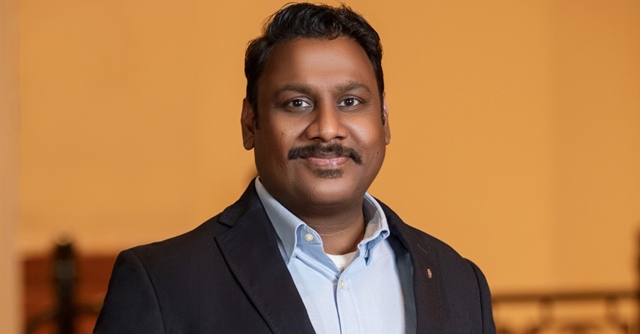
Rakesh Ravuri
Rakesh Ravuri is Chief Technology Officer & Senior Vice President – Engineering at Publicis Sapient
Next Article