

India’s ER&D faces gradual AI shift, not the disruption seen in IT
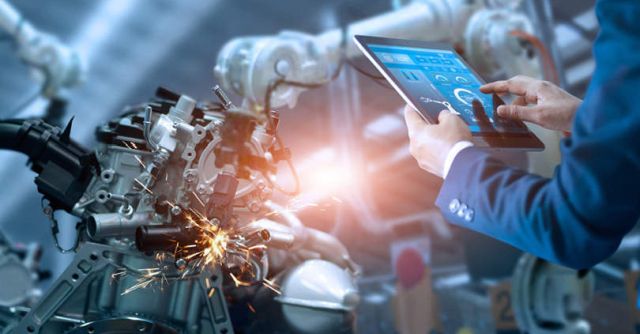
Generative artificial intelligence is unlikely to disrupt India’s engineering research and development (ER&D) sector as sharply as it has IT services—but it is already beginning to reshape how engineering work is executed.
A report by financial advisory firm Ambit Capital published this month suggests GenAI’s impact on ER&D will be more gradual, given the sector’s reliance on deep domain expertise, safety-critical systems, and regulatory oversight. Yet, automation is beginning to take hold in select layers such as coding, testing, and documentation.
A large, strategic sector with global relevance
The measured pace of disruption is significant because of the scale and importance of India’s ER&D ecosystem.
India’s ER&D market is projected to reach about $63 billion by 2025, growing at a 12–13% CAGR, according to NASSCOM. The country already accounts for roughly a third of global ER&D sourcing and hosts more than 1,400 global capability centres (GCCs), employing over 1.3 million people.
This scale, combined with a deep engineering talent base and strong presence of global firms, has positioned India as a core hub for product innovation across automotive, aerospace, semiconductors, and industrial sectors.
Why disruption will be slower—and more selective
Unlike IT services, where AI can automate large parts of application development and maintenance, ER&D work is inherently complex. It involves embedded systems, chip design, and mechanical engineering—domains where accuracy, safety, and real-world constraints limit the scope for full automation.
As a result, GenAI is expected to have a narrower, more targeted impact. Efficiency gains will accrue in specific layers rather than across the entire value chain, with human expertise remaining central to core engineering decisions.
This aligns with broader industry observations from McKinsey & Company, which note that while AI adoption in R&D is accelerating, most organisations are still in early stages of scaling it across workflows.
From cost savings to faster innovation
Where AI is making a clearer difference is in accelerating engineering cycles. As McKinsey estimates that AI tools are already improving productivity by 20–30% in areas such as documentation and manual workflows, while enabling engineers to focus on higher-value tasks. In mechanical engineering, AI can compress design timelines from weeks to hours and reduce rework by over 20%.
Ambit’s findings echo this shift. GenAI is helping reduce product development timelines by 20–50% through faster iterations, automated simulations, and quicker validation.
The implication is clear: AI in ER&D is less about cost takeout and more about increasing innovation throughput.
Automation hits the lower layers first
The early impact of GenAI is concentrated in repetitive, rules-based tasks such as coding, testing, simulation, and documentation.
Higher-order work—system architecture, product innovation, and safety validation—remains largely insulated due to its reliance on contextual judgment and domain expertise.
Industry perspectives from NASSCOM reinforce this trend, highlighting that AI is redefining engineering roles rather than replacing them, automating routine tasks while elevating the importance of design and decision-making.
Regulation and sector mix act as buffers
Adoption of AI in ER&D is also constrained by regulatory requirements. In sectors such as automotive, aerospace, and healthcare, stringent certification norms require human oversight and traceability at every stage. Even where AI is used, engineers must validate outputs, limiting the scope for full automation.
At the same time, ER&D’s industry mix provides a natural buffer. Automotive alone accounts for about 55% of sector revenues, anchoring demand in physical engineering where AI adoption is inherently more complex.
India’s ER&D firms see uneven gains
For Indian ER&D companies, the shift is creating both opportunities and near-term pressures. For example, KPIT Technologies is aligned with the rise of software-defined vehicles, where AI is central to next-generation automotive systems. Cyient is leveraging AI across aerospace and semiconductor engineering, particularly in design optimisation and predictive maintenance.
L&T Technology Services is further increasingly pivoting toward higher-value, AI-led engineering programmes, including sustainability and digital engineering. Meanwhile, Tata Elxsi and Tata Technologies face a more mixed outlook, given their exposure to cyclical segments such as automotive and telecom.
A structural shift, not a sudden disruption
The data points to a clear pattern. Even as AI adoption accelerates, its economic impact in ER&D is being shaped by structural constraints.
While parts of the workflow could see efficiency gains of 30–50%, these are concentrated in limited layers, whereas core engineering functions remain labour- and expertise-intensive. At the same time, enterprise adoption remains uneven, with most organisations yet to scale AI across end-to-end R&D processes.
For India, this suggests that near-term revenue disruption will likely be modest. Instead, gains will show up in improved productivity, faster product cycles, and higher engineering intensity per project.
Over the medium term, however, GenAI-driven efficiencies could introduce pricing pressure in commoditised services such as testing and documentation, even as demand shifts toward high-value engineering, systems integration, and AI-led design, as Ambit sees.
In effect, the numbers indicate a rebalancing rather than a reset. That said, ER&D is not immune to AI, but its trajectory will be defined less by disruption and more by a gradual shift toward higher-value, AI-augmented engineering work.
Next Article