

AI must become invisible but indispensable: Dabur CIO Manas Mehra
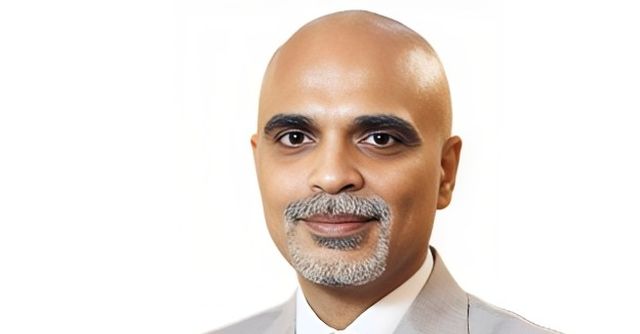
As companies move from AI experimentation to enterprise-wide deployment, the challenge is no longer technology adoption but embedding intelligence into the fabric of business operations. For Dabur India, the shift goes beyond algorithms—requiring changes in talent, culture and decision-making across a vast network spanning sales teams, distributors and business functions.
To drive that transition, the company is investing in digital academies, gamified learning, leadership workshops and its in-house platform, Dabur GPT, designed to make AI a natural part of everyday work. In an interview with TechCircle, Manas Mehra, Global CIO, Dabur India, discusses moving beyond pilots, embedding AI into workflows and why making AI “invisible but indispensable” is central to Dabur’s strategy. Edited excerpts:
Dabur is moving from AI adoption to scale. What has been the toughest operational challenge?
For us, the toughest challenge hasn’t been building AI—it has been embedding it into day-to-day decision-making across a very distributed business. We operate with a large field force, deep distributor networks and diverse product categories. Ensuring AI works seamlessly from the head office to the last mile is where the real complexity lies. So our focus has been on integrating AI directly into sales routines, marketing workflows and planning cycles, rather than creating parallel systems. At our scale, AI only delivers value when it becomes part of how the business runs every day.
This journey also didn’t start overnight. We invested significant time building the foundations of our digital transformation alongside partners like Accenture. That partnership is now helping us operationalise AI-led transformation at scale.
You’ve spoken about making AI “familiar”. How do you measure success beyond training and tool usage?
At Dabur, familiarity is not about usage—it is about comfort and trust in decision-making.
We look at whether teams are naturally turning to AI while making decisions, whether decision-making is becoming faster and more consistent, and whether it improves business KPIs on the ground. For us, success is when AI becomes invisible but indispensable in everyday work.
How is Dabur GPT driving outcomes across functions?
Dabur GPT has been central to making AI practical and relatable for our teams. We’ve positioned it as a digital colleague, not merely a tool—something employees can interact with during every day work. It enables AI agents for specific tasks, helping teams analyse data, identify gaps and generate insights.
Across sales, supply chain, finance and marketing, it is enabling faster insights, stronger decision-making and more consistent execution. When AI becomes an everyday companion to work, it augments human expertise and drives business value benefits—not just productivity gains.
As AI gets democratised, how are you ensuring governance?
Governance has been embedded into our AI journey from day one. We focus on data stewardship, secure access through role-based controls and responsible AI guardrails. This allows AI to remain widely accessible while operating within a disciplined and secure framework.
Dabur combines Ayurvedic heritage with a data-first strategy. How do you balance intuition and AI?
Dabur’s Ayurvedic heritage gives us deep domain knowledge and consumer trust. AI helps us sharpen and scale that intuition. We use AI to analyse wellness trends, validate insights across markets and accelerate product development cycles.
Our approach is simple: Ayurveda provides the foundation, and AI amplifies it with speed, precision and scalability.
Which functions are delivering the fastest returns from AI?
The quickest returns are emerging in sales, distribution and marketing—areas where there is strong data availability and measurable outcomes. Supply chain, finance and HR are also seeing growing benefits. Adoption continues to evolve in functions where data is less structured or decisions rely more heavily on experience.
What skills and mindsets are becoming critical?
The biggest shift is towards working with AI as a colleague. Key skills now include critical thinking, data interpretation and the ability to ask the right questions. It is less about being deeply technical and more about being AI-enabled.
What will separate companies that scale AI from those stuck in pilots?
The companies that succeed will be those that tie AI directly to business outcomes, embed it into workflows and drive adoption through business leadership. We’ve moved beyond pilots into structured scale, and partnerships are helping accelerate that reinvention journey.
What’s next for Dabur’s AI roadmap?
We are moving toward more real-time, autonomous decision-making with greater use of AI agents. Dabur GPT will continue evolving as a digital colleague, helping us scale AI adoption across the organisation.
Next Article