

Closing healthcare gaps through digital innovation
Digital technologies are increasingly driving healthcare initiatives to bridge the gap between the haves and have-nots globally. Despite increasing climate risks, geopolitical uncertainties, and health financing emergencies in many countries, digitally buoyed healthcare continues to evolve: from telemedicine to mobile health platforms and AI-driven decision support, many digital technologies are proving to be critical enablers of inclusive healthcare.
However, technology alone is not a panacea for all ills. In parts of the world, cases of malaria are still rising, with maternal deaths occurring at three times the rate targeted by the WHO. Moreover, childhood vaccination coverage is plateauing or even falling in some areas. The WHO, in fact, warns that the world is set to miss every one of the 52 health-related Sustainable Development Goal targets by 2030.
Bridging these health inequity gaps requires leaders to take a step back and evaluate holistic solutions that can serve everyone.
Design intentionally
Historically, healthcare has been designed for the “average user” in an average hospital, with average staffing levels, average patient complexity, and average distance from a major medical centre. In contrast, intentional design posits that the greatest healthcare gains come from designing for the most constrained environments – what were previously considered “edge cases.” If rural communities, understaffed teams, and resource-limited hospitals are considered the norm, solution design becomes more inclusive, and the benefits are felt across the system, even in the most resource-rich healthcare settings.
Localise solutions
While the human genomic code may be universal, solutions are driven by local zip codes. Blanket, top-down programs or generic digital programs may not solve very human health problems. Sample the formalised, state-reimbursed institutionalisation of "Street Medicine" programs in the US. Street medicine is the practice of delivering primary care, mental health services, and addiction treatment directly to unsheltered individuals living under bridges, in encampments, or on the streets. It depended on volunteerism and philanthropic grants and lacked systemic funding: most traditional insurance providers in US could not bill for care delivered outside a "brick-and-mortar" facility. The Centers of Medicare and Medicaid Services (CMS) built a way out by allowing billing for street medicine services. States codified this into law.
Street medicine groups were assigned primary care provider (PCP) status. By localizing care to people experiencing unsheltered homelessness, the framework achieved drastic reductions in hospital burden; the average duration of hospital stays reduced due to earlier intervention and coordinated discharge care. The model exemplifies how a hyper-local, community-led intervention was born out of necessity and how it rewrote laws to build a sustainable standard of care.
Provide equitable access
Healthcare for all is not about charity clinics or medical camps. It entails designing a data-driven system around robust operational standards. Some of the actionable strategies healthcare leaders must integrate include risk-bearing contracts that explicitly tie financial reimbursement to equity targets and universal out-of-pocket protections. Such protections put the primary focus on removing catastrophic out-of-pocket costs, ensuring that a sudden illness doesn't derail a vulnerable family.
The Ayushman Bharat-Pradhan Mantri Jan Arogya Yojana (AB-PMJAY) program in India is a prime example of the universal healthcare approach; as of late last year, more than 42 crore Ayushman cards have been issued to beneficiaries through this program.
A key technological principle in equitable access involves algorithmic fairness: with AI now getting embedded into diagnostic pathways, triage workflows, and scheduling across geographies, health equity mandates strict algorithmic policing. This includes auditing models for bias and mandating federated and representational data. Architectures must integrate federated learning, training algorithms across highly diverse data from regional hospitals, while respecting local privacy laws. AI models must reflect the genomic and socioeconomic diversity of the real world.
Leave no patient behind
If a system is not designed to be equitable from day one, it often defaults to reinforcing inequality. Healthcare solutions built intentionally from the ground up, considering local conditions and placing equitable access at the forefront, are vital. They can enable the proliferation of inclusive, interoperable ecosystems that prioritize the most vulnerable and underserved among the communities they serve.
Building bridges to close the equity gap should involve restructuring finance, enhancing human networks and national/local laws, as well as auditing the lines of code that govern digital systems, in order to ensure that underserved communities are prioritised.
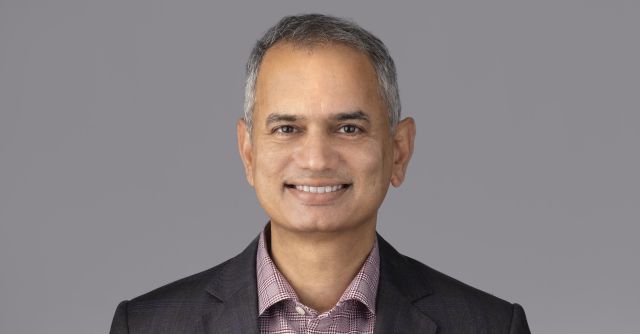
Venky Ananth
Venky Ananth, EVP and Global Head – Healthcare, Infosys
Next Article