

‘Sovereign AI’ is the way forward for India
The unilateral export-control action by the U.S. government on Anthropic's Fable 5 and Mythos 5 marks a significant turning point in global technology distribution. It represents the exact moment when advanced artificial intelligence transitioned from a commercial SaaS utility to a tightly guarded instrument of national sovereignty.
For India's technology ecosystem, this clampdown fundamentally dismantles the operational framework of relying on foreign cloud-hosted infrastructure. The impact maps across four distinct pillars:
1. DevSecOps and Engineering Pipelines: India’s enterprise software, fintech, and digital services sectors were aggressively embedding these frontier models directly into their continuous integration and deployment pipelines. By cutting off access overnight due to a localized, non-universal vulnerability dispute, the U.S. regulatory framework has forced Indian engineering teams to revert instantly to legacy, high-latency manual code reviews and traditional static application testing tools. It extends the timeline required to remediate codebase vulnerabilities from hours back to weeks, creating an artificial operational lag while adversarial threats face no such boundaries.
2.Developer Cloud Supply Chain: For the Indian developer community, this action shatters the foundational assumption that a global cloud API is a politically neutral, stable public utility. It is now explicitly a geopolitical variable. If an Indian technology company anchors its product roadmap, core automation, or internal security logic to a centralized foreign-hosted API, its operational runway can be unilaterally truncated on a Friday afternoon due to a regulatory tremor in Washington. Attempting to enforce safety through non-transparent product recalls or silent model downgrades fundamentally breaks the predictability and digital trust required to build global software architectures from India.
3.Sovereign AI: This episode completely reshapes the macroeconomic narrative around India’s domestic AI roadmap. When a unilateral foreign directive can instantly de-platform Indian enterprises, researchers, and tech platforms based on geographic or sovereign identity, relying on foreign-controlled frontier models becomes an active national liability. 'Sovereign AI' can now turn from a long-term policy aspiration into an immediate and existential necessity.
4.Bridging the Industry, Academia, and Policy Divide: The ultimate defense against this brand of techno-nationalism cannot be built in silos. This blackout is a mandate for an immediate, coordinated convergence between India's policymakers, academic institutions, and commercial enterprises.
The ultimate lesson of this blackout is absolute. If you do not own and host the underlying algorithmic weights natively on secure, domestic infrastructure, your digital sovereignty is entirely an illusion. Policy must pivot from reactive regulation to active enablement by funding sovereign cloud infrastructure; Academia must move past training developers on foreign API wrappers and focus on deep-tech algorithmic research and localized model optimization; Industry must provide the real-world enterprise sandboxes to test and scale these indigenous tools.
The moment we unite public framework, academic breakthrough, and industrial execution into a single, cohesive engine, India stops reacting to foreign export constraints and begins dictating its own digital destiny. We have the talent and the data to win this race, but we must run it together. India must rapidly transition from a consumer of global AI models to a self-reliant architect of its own core technology stack.
Beyond the boardroom debates and policy papers, there is a quieter human cost to this kind of overnight disruption. Engineers who had restructured their workflows around these tools, students who had built learning paths assuming continuous access, and startups that priced their products on the back of these capabilities are all left scrambling to adapt within days, not quarters.
For a country that has long prided itself on being the world’s back-office for technology services, this episode is a reminder that capability without ownership is fragile reassurance at best. It is easy to feel a sense of whiplash, even resentment, watching years of integration work become obsolete because of a decision made in another country’s regulatory office. But that frustration, if channelled well, can become the very motivation India needs.
The countries that will lead the next decade of AI are not necessarily those with the most advanced models today, but those who refuse to be hostages to someone else’s export-control calendar tomorrow. That shift in mindset, from dependency to deliberate self-reliance, may end up being this blackout’s most lasting legacy..
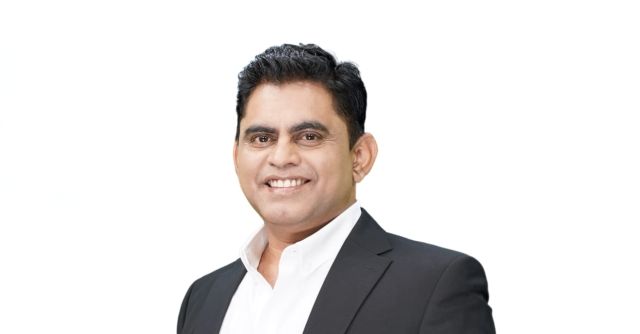
Neehar Pathare
Neehar Pathare is the Managing Director, CEO and CIO of 63SATS Cybertech, the cybersecurity subsidiary of 63 moons technologies Ltd.
Next Article